
? 01 - PROJECT PROFILE
Business Website Design & Build
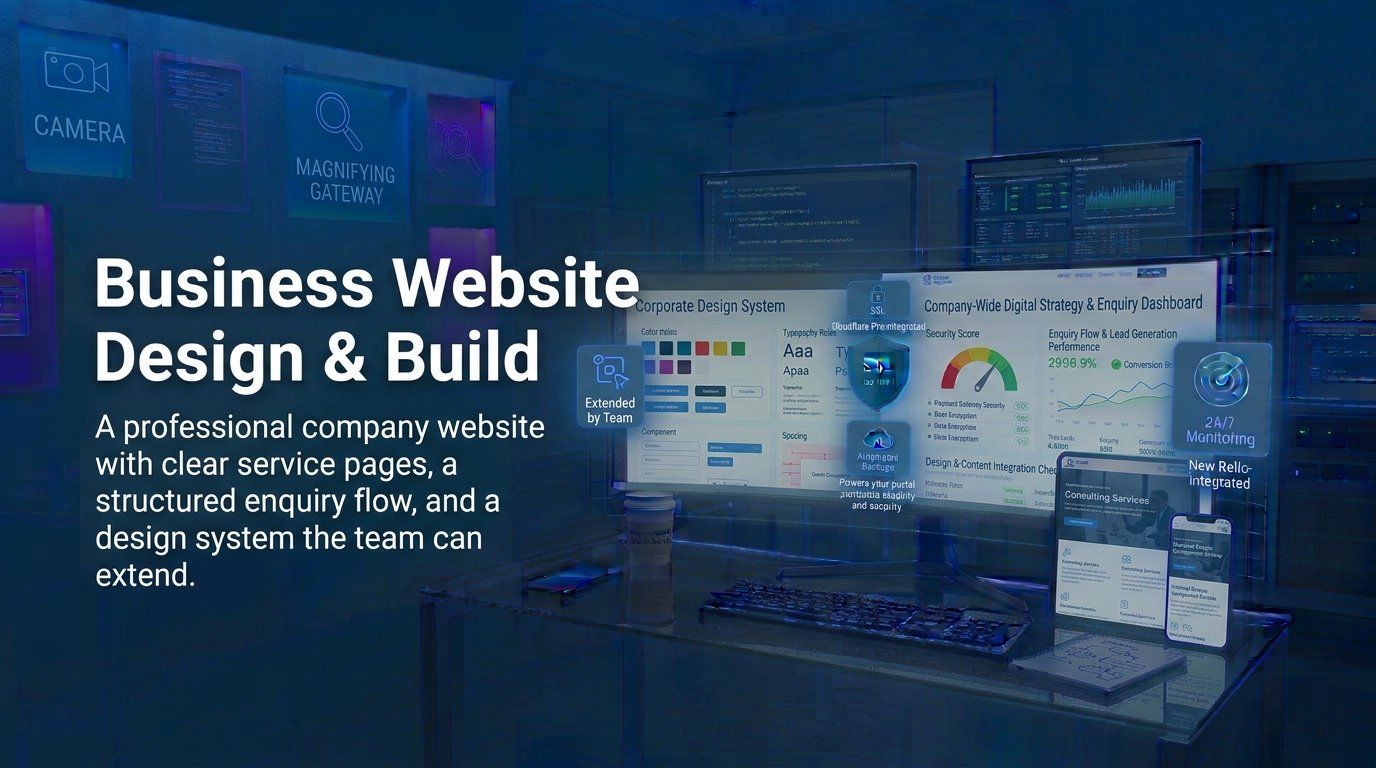
A professional company website with clear service pages, a structured enquiry flow, and a design system the team can extend.
The Brief
A growing business needed a website that could explain its services clearly, look credible to new customers, and make it easy to request a quote.
The challenge was practical rather than cosmetic. A professional company website has to do three jobs at once: describe what the business offers, earn enough trust to start a conversation, and guide a visitor towards a single next step. The existing web presence did not reflect the quality of the business, and the route from first impression to enquiry was harder than it should be for a company whose pipeline depends on inbound enquiries.
The brief centred on three practical goals for the business website design:
- Present the services with the credibility the business earns in person
- Guide visitors from a first impression to a simple, low-friction enquiry
- Give the team a website they can update themselves after launch
For a business website, design is only half of the question. The other half is structure: which pages carry the enquiry, how the services are explained, and how little effort it takes for a busy visitor to act. The project was therefore scoped as a complete website design and development engagement rather than a visual refresh.
Credibility is earned in person, but most visitors decide before they ever speak to anyone. The new business website design had to carry that trust onto the page: a clear explanation of each service, plain language about how the company works, an obvious route to get in touch, and content the team can keep accurate as the business grows. A website that looks good but explains nothing converts nothing; a website that explains everything but looks dated loses the visitor before the explanation is read. The design and the content therefore had to be planned together from the first wireframe.
Our Approach
We mapped the service pages, designed a clean visual system, and built a responsive WordPress site with enquiry forms and editable content blocks.
The delivery included:
- A planned sitemap and page structure so each service has a clear, focused page
- A reusable design system for consistent pages, forms, and content sections
- Responsive, accessible templates tested on phones, tablets, and desktop
- Enquiry forms with validation, so new leads arrive complete and easy to action
We started with the pages that carry the enquiry. Each service page was planned around the questions a buyer asks before contacting a company: what is offered, why trust it, and how to take the next step. That structure became the basis for the visual design, so layouts, spacing, and calls to action stayed consistent as new pages were added later.
The build itself used a maintainable WordPress foundation. Clean template code, sensible content types, and straightforward editing meant the team could update pages, add case studies, and publish new service content without starting over each time. Custom blocks and fields replaced one-off page building, so the design system could be extended rather than copied.
Search visibility was built into the project from the start rather than added afterwards. Semantic headings, descriptive metadata, sensible URLs, and internal links to the key service pages give the website a crawlable structure that supports long-term search visibility, while the enquiry forms were tested end to end so no lead is lost to a broken field or an unclear error message.
Accessibility was part of the build, not an afterthought: semantic templates, keyboard-friendly navigation, readable contrast, and clear labels on every form field. That approach protects the site from excluding the very customers it is meant to serve.
After the build, we handed the website over with practical editing guidance: which blocks to use for new pages, how to add case studies in the same format as the existing ones, and where to keep forms, metadata, and content sections consistent. The goal was independence. The team can publish new content, extend the design, and prepare the next service pages without depending on a developer for routine changes — the same maintainability principle we apply to every website development project.
Technologies Used
- WordPress
- PHP
- MySQL
- Cloudflare
The Results
The project gave the team a clearer service structure, a reusable design system, and a website they can update without developer support. Enquiry paths are simpler, and the site is ready for future case studies and service pages.
Practical outcomes after launch:
- A clearer structure across all service pages
- A reusable design system for future content
- Routine edits the team can make themselves
- Simpler paths from page view to enquiry
The most important change is leverage. The website is no longer a one-off page that ages the moment content changes: new services, new case studies, and new campaigns can be published with the same templates, the same validation, and the same design language. That turns the website from a static brochure into an asset the business can keep working for it.
The repository of work is still small and growing. For a business that depends on enquiries, that combination of credibility, clarity, and self-service editing is what makes the website worth having.
The project also left the company with a platform it can build on. New case studies, additional services, and campaign pages can be added with the same structure and validation instead of being one-off pages that slowly drift apart. For a business website, that is the real return on the build: a credible, editable, and extendable presence that keeps supporting enquiries long after launch.
In short, this business website design and build turned an unclear web presence into a credible, editable, and enquiry-ready website the team can keep working for the business.