
? 01 - PROJECT PROFILE
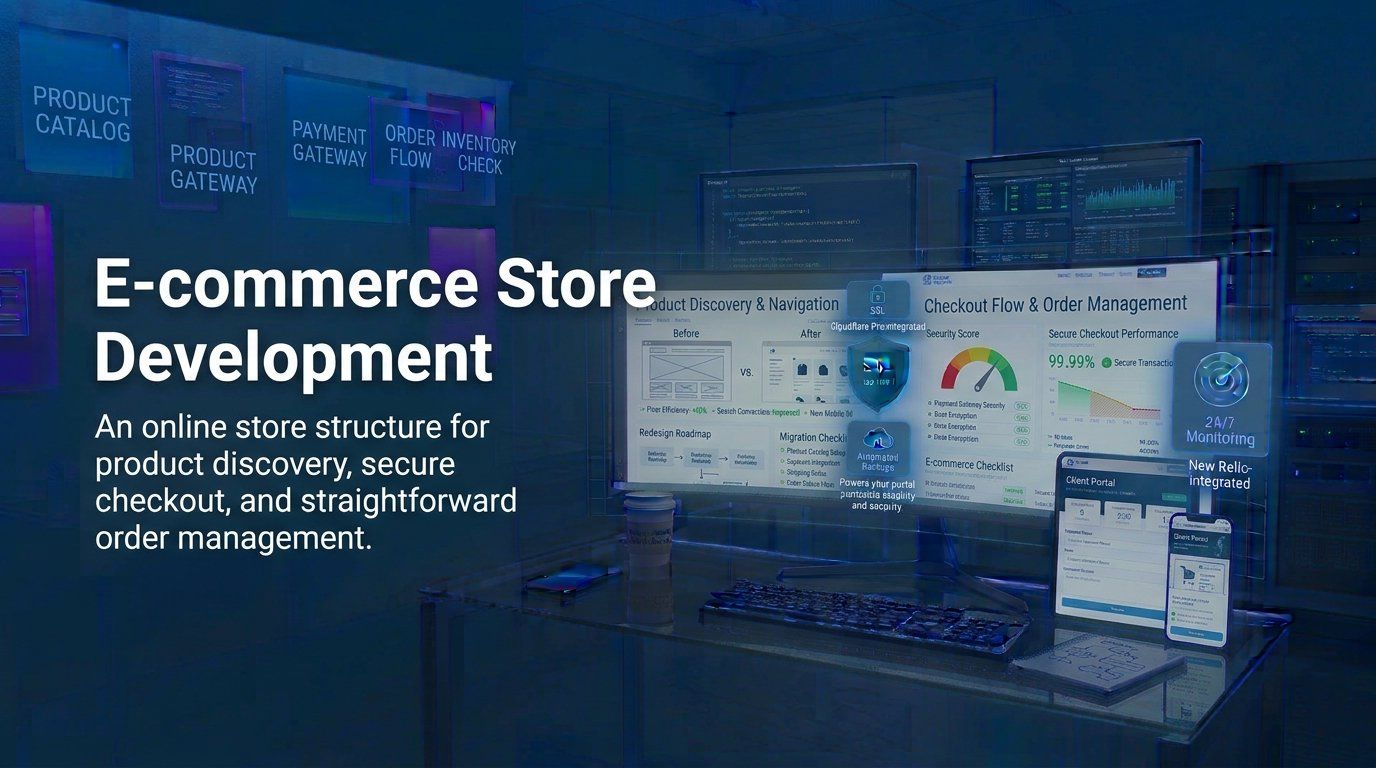
E-commerce Store Development
An online store structure for product discovery, secure checkout, and straightforward order management.
The Brief
A retail business wanted to sell products online without creating a complicated storefront or losing the personal feel of its brand.
Selling online adds a layer of complexity that a brochure website does not have. Every product needs structure a customer can browse, a checkout that completes without confusion, and order workflows the team can follow every day. The project therefore treated the e-commerce website development as an operational decision, not just a design exercise.
The brief centred on three practical goals for the e-commerce store development:
- Make the catalogue easy to browse, search, and compare
- Make checkout straightforward, trustworthy, and quick to complete
- Let the team manage products, shipping, and orders without developer support
For an online store, design and operations have to be planned together. The pages that display products also have to collect the information a sale depends on: the right variant, the right delivery option, and the right payment details. A design that looks good but hides that information costs sales; a store that works but looks untrustworthy costs them too.
Brand was the other half of the brief. The business already had customers who trusted the people behind it, and the online store had to carry that feeling onto the site: honest product information, a layout that looks established rather than makeshift, and a checkout that does not ask for anything unnecessary. An e-commerce store that makes buying feel risky will lose the sale before the order form is ever filled in, so the design had to earn confidence at every step from catalogue to confirmation.
The brief also recognised that selling online changes the rhythm of the business. Opening hours stop being the limit: customers can find products, compare options, and place an order whenever it suits them. That reach only matters if the store is practical to run — products that are easy to add, prices that can be updated without developer help, and orders that arrive with the information needed to pack, ship, and follow up. The e-commerce website development was scoped around those operational realities as much as around the design.
Our Approach
We planned the catalogue, product templates, checkout flow, and shipping settings, then built a WooCommerce store that the team can manage in-house.
The delivery included:
- A planned catalogue structure with categories, product detail templates, and clear navigation
- A checkout flow designed around the fewest steps that still collect what fulfilment needs
- Shipping settings and order statuses configured for straightforward fulfilment
- Store management guidance so products, prices, and orders stay easy to run
The catalogue came first. Before any design work, we planned how products would be grouped, what information each product page must show, and how a customer moves from a category to an item without getting lost. That planning keeps the store usable as the catalogue grows and gives every product page the same predictable structure: image, description, key details, and a clear path to buy.
Checkout received the same attention. The flow was kept short, the required fields were limited to what the business genuinely needs, and shipping options were configured to match how orders are actually packed and sent. The result is a WooCommerce store connected to the same WordPress stack the rest of the site uses, so content, products, and orders are managed in one familiar place.
The templates were built for ongoing use by the team. Product pages, category pages, and the cart remain consistent on phones and desktop alike, and the store management steps were documented so staff can add products, adjust shipping, and review orders without rebuilding anything.
Before launch, the checkout was walked through end to end on different devices, and the order notifications, product fields, and shipping options were checked so that a completed customer order reaches the team in a form the team can act on. Testing this way caught the small details that matter commercially: missing product details, confusing delivery options, and forms that ask too much. The store went live only when the path from product page to completed order was uncomplicated and repeatable.
Technologies Used
- WordPress
- WooCommerce
- PHP
- MySQL
- Cloudflare
The Results
The store launched with a manageable catalogue, a clear checkout flow, and documented product-management steps. The team can add products, update shipping settings, and review orders without rebuilding the site.
Practical outcomes after launch:
- A catalogue the team can grow without redesigns
- A checkout flow that completes without confusion
- Order management the team can follow every day
- Product content the team edits themselves
The most important change is operational. Products, orders, and shipping now live in one managed store instead of being spread across inboxes and spreadsheets. The website has a clear job — selling online — and the structure around it: catalogue, checkout, and fulfilment, all set up to be maintained by the people who run the business.
The store is also built to grow. New product groups, seasonal ranges, and promotions can be added within the same structure, so the e-commerce development investment keeps working as the catalogue expands.
For the business, the outcome is an online store that behaves like an extension of the shop rather than a separate project. Customers find products faster, complete checkout with less friction, and the team can manage the day-to-day work of selling online without waiting for a developer. In short, the e-commerce website development gave the business a manageable way to sell products online, from catalogue to checkout to fulfilment.
The site also prepared the business for growth. New product groups, seasonal ranges, and promotions can be published with the same templates and checkout settings, so the store can expand without starting over. In short, this e-commerce website development turned an idea about selling online into a manageable catalogue, a clear checkout, and orders the team can fulfil every day.